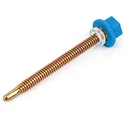
Why 410 Stainless Steel Still Dominates Self Drilling Screws in Steel Construction
In most steel construction projects, the choice of self drilling screws is often made quickly - sometimes based on price, sometimes based on habit.
But once installation begins, the real differences between materials become obvious.
Some screws cut through steel effortlessly.
Others struggle, overheat, or fail before the job is done.
That's why, despite the availability of many materials, 410 stainless steel continues to dominate steel-to-steel applications.
It's Not About Stainless Steel - It's About Hardness
A common misunderstanding is that all stainless steel screws perform similarly.
In reality, what matters most in steel applications is not corrosion resistance - it's hardness.
410 stainless steel can be heat-treated.
That means the drill point stays sharp and strong under pressure.
In practical terms:
it penetrates steel instead of slipping
it handles higher torque
it reduces installation time
This is why installers prefer it - not because it's stainless, but because it works.

Where 410 Performs Well
410 self drilling screws are widely used in:
steel purlins
metal roofing structures
brackets and frames
general steel-to-steel fastening
In these environments, drilling performance is the priority.
Where 410 Starts to Fail
However, 410 is not a perfect solution.
In outdoor or coastal environments, users often report:
surface rust after exposure
reduced lifespan in humid conditions
This is not a product defect.
It's simply a limitation of the material.
Why 304 and 316 Don't Replace 410
At first glance, 304 and 316 stainless steel seem like better options.
They offer:
stronger corrosion resistance
longer lifespan in harsh environments
But they lack one critical feature:
they cannot be hardened
As a result:
drilling performance is significantly weaker
tips wear out quickly
failure rates increase in steel applications

The Industry Shift: Bimetal Screws
To solve this trade-off, many projects are now turning to bimetal self drilling screws.
These combine:
a hardened 410 drill point
a 304 or 316 stainless steel body
This allows:
efficient drilling into steel
improved corrosion resistance
In high-end construction and export projects, this solution is becoming more common.
What Buyers Often Overlook
In many cases, screw failure is not due to quality -
it's due to incorrect material selection.
Choosing between 410, 304, and 316 should depend on:
the material being fastened
environmental conditions
expected service life
Conclusion
410 stainless steel remains the standard for steel construction for a simple reason:
it delivers the drilling performance required on site.
However, as projects demand longer lifespan and better corrosion resistance, alternatives like bimetal are gaining ground.
Understanding these differences is what separates a successful installation from a costly mistake.