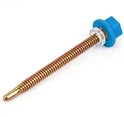
In the vast systems of industry and everyday life, bolts are perhaps the most inconspicuous of all. They lack the surging power of an engine, the sophistication of a chip, and are often cloaked in rust and oil, hidden deep within the structure. Yet, it is precisely this "invisibility" that makes them a fundamental link supporting modern civilization. From the steel skeleton of skyscrapers to the micro-components of mobile phones, from the sealed cabin of a spacecraft to the pedals of a children's bicycle, bolts, with their simplest screw-on force, embody the multifaceted meanings of "value."
I. Functional Value: A Compromise between the Art of Connection and Mechanics
The core function of a bolt is to connect, but this process is far more than simply tightening. A qualified bolt must simultaneously meet the triple requirements of strength, precision, and adaptability. The pitch of its threads must precisely match that of the nut to ensure uniform force distribution. The choice of material must be carefully considered based on the application (for example, high-strength alloy steel is often used for bridge bolts, while lightweight stainless steel is preferred for electronic equipment). Even the surface treatment (galvanizing for rust prevention, blackening for corrosion resistance) directly impacts its service life. More crucially, bolts offer a "flexible connection"-in contrast to the irreversibility of welding, bolts allow for disassembly and maintenance. This "reversible strength" is precisely the key to balancing efficiency and safety in engineering practice.
In extreme environments, the value of bolts is magnified to the extreme. For example, riser connectors on deep-sea drilling platforms must withstand hundreds of megapascals of water pressure and corrosive seawater. Each bolt undergoes pressure tests simulating a depth of 10,000 meters. Fasteners on spacecraft must maintain absolute reliability in a vacuum and under temperature fluctuations exceeding 300°C. The failure of any single bolt could result in the destruction of hundreds of millions of dollars in investment. In these scenarios, bolts are no longer simple parts but rather "liability contracts" written in their physical properties.
II. Economic Value: The "Invisible Hub" in the Industrial Chain
From an economic perspective, bolts, despite their low unit price (a typical M6 bolt might cost only a few cents), are the indispensable "capillaries" of the industrial chain. Trillions of bolts are produced globally each year, supporting dozens of trillion-dollar industries, including construction, automotive, and machinery manufacturing. Without bolts, steel components couldn't be assembled into factories, engine cylinders couldn't be fixed to crankshafts, and wind turbine blades couldn't be connected to wheel hubs. Statistics show that bolts account for over 40% of the standard parts consumed annually by China's manufacturing industry alone. While its scale may be inconspicuous, bolts, like the lubricant between gears, ensure the smooth operation of the entire industrial machinery.
More profoundly, the standardization of bolts has driven a revolution in industrial collaboration and efficiency. Since the first thread standard was established in Britain in the 19th century, global standards for bolt specifications (such as the metric M series and the imperial UNC/UNF series) have been standardized through systems like ISO and ANSI. This means that bolts from a German machine tool can be quickly matched at a Chinese spare parts factory, and a cargo ship can be repaired without waiting for custom parts. This "standardization dividend" has reduced the cost of global trade and made bolts a silent witness to industrial globalization.
III. Humanistic Value: A Symbol of Resilience in the Ordinary
On a more abstract level, bolts embody humanity's simple pursuit of reliability. Its existence reminds us that true value doesn't necessarily come from dazzling brilliance, but rather from daily perseverance. As the older generation of craftsmen often said, "30% craftsmanship, 70% tools"-the force of a wrench and the torque of a bolt often determine the final quality of a work. This reverence for detail, extended to culture, has become a metaphor for the "screw spirit": You don't have to be the star of the spotlight; as long as you play an irreplaceable role in your position, you contribute to the whole.
Interestingly, bolts are often imbued with emotional significance. Some people collect copper bolts from vintage bicycles, their mottled surface bearing the marks of time. Engineers routinely check for loose bolts in critical areas when repairing equipment. This almost ritualistic act is actually a solemn affirmation of responsibility. Even in literature, bolts occasionally become metaphorical symbols-for example, a "loose bolt" in a novel may indicate a potential risk in the system, while "tightening every bolt" represents a persistent pursuit of perfection.
Conclusion: Rediscovering Tiny Lights
When we admire the majestic grandeur of cross-sea bridges or marvel at the speed of high-speed trains, we rarely think of the bolts embedded deep within their steel structures. Just as we often overlook the countless foundational components that support modern life while enjoying its conveniences, it's these seemingly ordinary bolts that, with their spiraling power, connect scattered individuals into a whole, carrying the weight of civilization with their silent tenacity. Their value lies not in their size, but in their ability to firmly "grip" the world in their own right.
Next time you tighten a bolt, pause for a second-that crisp click may be the most unpretentious footnote to industrial civilization.