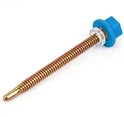
Why Roofing Screws Fail Near Coastal Areas Even After Passing Salt Spray Tests
Many roofing contractors and importers assume that a roofing screw with a 500-hour or 1000-hour salt spray test report will automatically survive for many years in coastal environments.
In reality, that is not always true.
Over the past few years, we have seen several roofing projects near coastlines where roofing screws began showing rust much earlier than expected, even though the screws technically passed laboratory salt spray testing.
This problem is especially common in:
Coastal roofing projects
Solar mounting systems near the sea
Industrial warehouses near ports
Agricultural roofing in humid tropical regions
Metal roofing exposed to constant salt air
The misunderstanding usually comes from treating salt spray testing as the only indicator of corrosion resistance.
In actual construction environments, many additional factors affect how long roofing screws last.

Salt Spray Tests Are Laboratory Simulations - Not Real Coastal Conditions
Salt spray testing is useful, but it is still a controlled laboratory test.
The test normally evaluates how long a coating resists corrosion inside a sealed chamber with continuous salt fog exposure.
However, real coastal environments are far more aggressive and inconsistent.
A roofing screw installed near the ocean may experience:
Continuous humidity changes
UV exposure
Rainwater accumulation
Thermal expansion
Sea salt carried by wind
Acid rain
Mechanical stress during installation
These conditions can damage the coating differently from a laboratory test chamber.
That is why some screws that pass 1000 hours in salt spray testing may still fail relatively early on actual roofing projects.

The Drill Point Is Often the Weakest Area
One of the most overlooked issues in self drilling roofing screws is the drill point itself.
During drilling installation, friction generates heat at the drill tip. If the heat treatment or coating quality is unstable, the protective coating near the drill point can crack or burn during installation.
Once the base steel becomes exposed, corrosion starts much faster.
This is especially visible in:
Thick steel purlin installations
High-speed installation
Incorrect driver pressure
Poor drill point geometry
In many low-cost roofing screws, the coating thickness near the drill point is inconsistent because of production limitations.
As a result, the screw may pass laboratory testing before installation but fail prematurely after installation on-site.
EPDM Washer Quality Matters More Than Many Buyers Expect
In roofing systems, the screw itself is not the only factor controlling corrosion resistance.
The EPDM bonded washer also plays a critical role.
Low-quality EPDM washers can:
Crack under UV exposure
Harden over time
Lose elasticity
Allow water penetration
Create leakage points
Once water enters the sealing area, corrosion accelerates around the screw head and roof sheet connection.
In tropical coastal regions such as Southeast Asia, the Middle East, and parts of South America, EPDM aging can become a major cause of roofing system failure.

Common Roofing Screw Coatings and Their Real-World Performance
| Coating Type | Typical Salt Spray Resistance | Real Coastal Performance |
|---|---|---|
| Zinc Plated | 24–72 hours | Poor |
| Heavy Zinc | 96–200 hours | Limited |
| Ruspert Coating | 500–1500 hours | Good if properly applied |
| Stainless 410 | Moderate | Better than zinc, but can still stain |
| Bi-Metal Stainless | Excellent | Best for aggressive marine environments |
Salt spray hours alone should never be treated as the only purchasing standard.
Coating consistency, substrate material, and installation conditions are equally important.

Why Some Ruspert Roofing Screws Still Rust
Many buyers assume all Ruspert screws perform equally.
That is not true.
Ruspert performance depends heavily on:
Base material preparation
Coating thickness consistency
Curing temperature control
Surface cleanliness
Edge coverage near threads and drill points
Poorly controlled production may still produce screws that pass short-term testing but fail under long-term outdoor exposure.
This is why experienced importers often request:
Actual salt spray reports
Cross-section coating checks
Outdoor exposure references
Real project feedback
instead of relying only on marketing claims.

Recommended Roofing Screws for Coastal Projects
For projects located near the sea, ports, or tropical coastal regions, the following recommendations are commonly used:
Light Coastal Exposure
Recommended:
High-quality Ruspert roofing screws
Minimum 500h–1000h salt spray resistance
UV-resistant EPDM washers
Medium to Heavy Coastal Exposure
Recommended:
Premium Ruspert systems
Better sealing systems
Controlled installation torque
More frequent maintenance inspections

Severe Marine Environments
Recommended:
Bi-metal stainless steel roofing screws
Stainless head and shank combination
High-performance sealing systems
Especially for:
Solar projects
Port warehouses
Chemical plants
Coastal industrial roofing
Installation Is Also Critical
Even the best roofing screw can fail if installation is incorrect.
Common installation mistakes include:
Over-driving
Under-driving
Incorrect screw angle
Excessive installation speed
Wrong drill capacity selection
These issues can damage coatings and washers immediately during installation.
In many roofing failures, the screw itself is not the only problem - installation practices also contribute significantly.
Roofing Screw Selection Should Match Real Project Conditions
A roofing screw suitable for inland dry environments may not survive in marine climates.
When choosing roofing fasteners for coastal projects, buyers should evaluate:
Distance from the sea
Humidity levels
Roof design
Steel thickness
Coating systems
Expected service life
Maintenance conditions
instead of comparing salt spray hours alone.
Common Roofing Screw Sizes Used in Coastal Roofing Projects
| Screw Size | Common Application |
|---|---|
| #10 x 2" | Metal roofing sheets |
| #12 x 2" | Structural roofing |
| #12 x 3" | Insulated sandwich panels |
| 5.5 x 25mm | Thin steel roofing |
| 5.5 x 55mm | Roof-to-purlin installation |
| 5.5 x 75mm | Thick insulation roofing systems |
Final Thoughts
Salt spray testing is an important reference tool, but it should never be treated as the only indicator of roofing screw durability.
Real coastal performance depends on a combination of:
Coating quality
Heat treatment stability
EPDM washer reliability
Installation practices
Environmental exposure
For long-term roofing projects near coastal areas, selecting the right roofing screw system is far more important than simply choosing the highest salt spray test number.
Need roofing screws for coastal or marine projects?
Our team can help recommend suitable coating systems, drill points, and roofing fasteners based on your project environment and corrosion requirements.