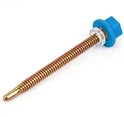
As one of the most fundamental fasteners, screw performance directly impacts the reliability, durability, and safety of mechanical structures. From microscopic materials science to macroscopic engineering applications, screw performance encompasses multiple dimensions, including mechanical properties, environmental adaptability, and manufacturing precision. Each indicator requires rigorous design and verification.
I. Core Mechanical Properties: The Balance between Strength and Load
A screw's primary function is to transmit and bear load, making its mechanical properties crucial for evaluation. Tensile strength and yield strength determine a screw's performance under axial tension. For example, high-strength alloy steel screws (e.g., grade 8.8 and above) can withstand stresses of hundreds of megapascals and are suitable for automotive engines or aerospace structures. Shear strength, on the other hand, influences its stability under lateral forces and is commonly found in thin plate connections. Furthermore, fatigue strength determines a screw's lifespan under repeated loads. For example, screws in bridge bearings must withstand millions of cycles of testing to avoid catastrophic failure caused by microcrack propagation.
II. Precision Material Science Selection
The foundation of a screw's performance lies in its material selection. Carbon steel (such as Q235) is low-cost and easy to machine, but it rusts easily and requires electroplating or galvanizing. Stainless steel (such as 304/316) achieves corrosion resistance thanks to its chromium-nickel alloy passivation film and is widely used in medical equipment and marine environments. Titanium alloy screws are favored in the aerospace industry for their lightweight and high strength-to-weight ratio, but they are significantly more difficult and expensive to machine. In recent years, composite screws (such as carbon fiber reinforced plastic) have begun to be used in electronic equipment to reduce weight and vibration transmission.
III. Challenges and Breakthroughs in Environmental Adaptability
Extreme environments place special demands on screw performance. In high-temperature environments (such as engine exhaust systems), screws must be made of heat-resistant steel (such as Inconel 718), which has oxidation resistance exceeding 800°C. In low-temperature environments (such as liquefied natural gas storage tanks), ordinary steel will fracture due to brittle transition, necessitating the use of austenitic stainless steel or nickel-based alloys. To combat chemical corrosion, in addition to traditional galvanizing, Dacromet coating or PTFE (Teflon) impregnation can further enhance salt spray resistance.
IV. Geometric Accuracy and Functional Derivatives
A screw's thread accuracy (e.g., ISO tolerance grade), head shape (hexagon socket/cross recess), and surface treatment directly impact assembly efficiency and functional expansion. For example, self-tapping screws, thanks to their specialized thread design, can directly penetrate plastic materials (such as plastic or thin aluminum sheet), eliminating the need for pre-drilling. Locking screws (such as nylon inserts or spring washer combinations) prevent loosening due to vibration through frictional resistance. With the trend toward miniaturization, medical screws can reach diameters less than 1mm, requiring micromachining technology to ensure dimensional consistency.
V. Future Directions: Intelligence and Sustainability
With the development of Industry 4.0, smart screws are beginning to incorporate sensors (such as strain gauges or temperature sensors) to monitor structural health in real time. Biodegradable screws (such as those made of magnesium alloys) are gradually replacing metal implants in orthopedic surgery, avoiding secondary removal surgeries. At the same time, reducing material usage through topological optimization design or employing recycled metals has become a key focus of green manufacturing.
Despite their small size, screws are the invisible cornerstones of mechanical systems. Improving their performance relies not only on breakthroughs in a single technology but also on collaborative innovation across multiple disciplines, including materials science, mechanical design, and surface engineering. In increasingly sophisticated and demanding applications, every evolution of screws pushes the boundaries of human engineering capabilities.