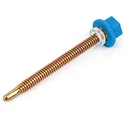
As a common fastener, screws' appearance not only influences their functionality and applicability but also directly reflects the manufacturing process and material properties. From overall form to detailed design, every component of a screw is meticulously considered to meet the needs of various scenarios.
Overall Form and Basic Structure
A screw typically consists of three parts: a head, a threaded shank, and a tip (or point). The head is the most visible part of a screw and comes in a variety of shapes, such as flat, countersunk, round, and hexagonal. Different head designs determine the screw's installation method and application. For example, the head of a countersunk screw is recessed into the mounting surface, making it suitable for applications requiring a smooth appearance; while a hexagonal head screw is easy to tighten with a wrench and is often used for high-strength fastening.
The threaded shank is the core component of a screw, and its appearance includes pitch, thread form, and diameter. Threads can be coarse or fine. Coarse threads offer higher strength but lower tightening accuracy, making them suitable for general fastening. Fine threads provide a tighter fit, making them suitable for thin-walled materials or applications requiring anti-loosening. The surface finish of the threads also affects the performance of the screw. Smooth threads reduce friction, while coated threads (such as zinc or nickel plating) enhance corrosion resistance.
Head Design and Surface Treatment
The design of a screw head not only influences its functionality but also determines its appearance. For example, hexagonal socket head screws, with their hexagonal recess, accommodate hexagonal wrenches and are suitable for use in confined environments. Phillips or slotted head screws, on the other hand, are operated with screwdrivers and are widely used for routine maintenance and assembly. The edges of the head may be chamfered or rounded to reduce scratching during installation and enhance aesthetics.
In terms of surface treatment, screws may appear metallic (such as the silver-gray of stainless steel or the matte finish of carbon steel) or may be electroplated, painted, or anodized to impart different colors and protective properties. For example, zinc-plated screws appear golden yellow and offer excellent rust resistance, while black screws are often used in industrial equipment for enhanced wear resistance.
Tip and Special Designs
The tip (or point) of a screw also has unique aesthetic characteristics. Standard screws typically have flat or slightly pointed ends, facilitating initial positioning. Self-tapping screws, on the other hand, have a sharp, drill-like tip, enabling them to create threads directly in softer materials, such as plastics or thin metals. Certain special-purpose screws, such as wood screws, have sharper ends to enhance their ability to penetrate wood.
In addition, some screws may feature additional markings on the head or shank, such as brand logos, size codes, or quality certification symbols. These details not only enhance traceability but also lend a more professional appearance.
Summary
A screw's visual characteristics are a direct reflection of its functionality and practicality. From head shape to thread design, surface finish, and end construction, every detail is optimized to suit diverse applications. Whether in industrial manufacturing or everyday maintenance, understanding a screw's visual characteristics can aid in proper selection and use, ensuring effective fastening and long-term reliability.