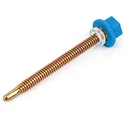
How to Select the Right Drill Point Based on Steel Thickness
A Practical Guide Based on JIS Standard Drilling Performance Tests
Introduction
Selecting the correct drill point for self-drilling screws is one of the most critical factors affecting installation efficiency, drilling time, and fastening reliability-especially in steel and roofing applications.
In many projects, problems such as broken drill points, excessive heat, slow penetration, or unstable drilling performance are not caused by poor material quality, but by incorrect drill point selection for the actual steel thickness.
This article explains how to choose the right drill point based on steel thickness, using JIS standard drilling performance test references, including loading force, drilling time, RPM, and maximum drilling capacity.
Why Drill Point Selection Matters More Than Screw Size
Unlike conventional screws, self-drilling screws rely on the drill point to:
Cut through steel without pre-drilling
Maintain stable penetration under controlled RPM
Prevent excessive torque and heat buildup
Ensure consistent installation speed in mass fastening
Even when two screws share the same diameter and thread design, different drill point geometries (#2, #3, etc.) will produce very different drilling results.
Overview of JIS Standard Drilling Performance Tests
The JIS standard evaluates self-drilling screws under controlled conditions, focusing on:
Steel plate thickness
Maximum loading force (kg)
Maximum drilling time (seconds)
Maximum drillable thickness
Recommended RPM range
Drill point type
These parameters provide a reliable reference for matching drill points to real-world steel thickness.
Common Drill Point Types Explained
#2 Drill Point – For Thin to Medium Steel
Typical application range:
Steel thickness: 1.6 mm – 3.0 mm
Controlled RPM: around 2500–4000
Short drilling time
Lower axial load requirement
Best used for:
Roofing sheets (PPGI, GI)
Light steel framing
Thin steel purlins
Metal-to-metal fastening where speed is critical
Using a #2 drill point on thicker steel may lead to:
Excessive wear
Slower penetration
Increased risk of drill tip damage
#3 Drill Point – For Medium to Thick Steel
Typical application range:
Steel thickness: 3.2 mm – 6.3 mm
Lower RPM requirement
Higher loading tolerance
Longer but stable drilling time
Best used for:
Structural steel
Heavy-gauge purlins
Steel-to-steel connections
Applications requiring higher drilling stability
Choosing a #3 drill point improves:
Drilling consistency
Tip durability
Reduced failure rate in thick steel
How to Match Drill Point to Steel Thickness (Practical Guide)
| Steel Thickness | Recommended Drill Point | Key Advantage |
|---|---|---|
| ≤ 2.0 mm | #2 | Fast penetration, high efficiency |
| 2.3 – 3.0 mm | #2 or #3 | Depends on RPM & load |
| 3.2 – 4.5 mm | #3 | Stable drilling, less wear |
| ≥ 5.0 mm | #3 | Controlled drilling, durability |
Key rule:
Thicker steel does not mean higher RPM - it requires better drill geometry and controlled speed.
RPM and Loading: Often Misunderstood Factors
A common misconception is that increasing RPM improves drilling speed.
In reality:
Excessive RPM causes overheating
Drill tips dull faster
Drilling time may increase instead of decrease
JIS test data shows that proper RPM matched with the correct drill point produces the shortest drilling time and highest consistency.
Manufacturing Control and Drill Point Consistency
In large-scale production, drill point performance must remain stable across millions of pieces. This requires:
Precise drill point geometry control
Periodic replacement of drill point molds
Batch-level drilling performance testing
Controlled heat treatment and hardness balance
Without these controls, even a correctly selected drill point design may fail to perform consistently in real installations.
Conclusion
Choosing the right drill point based on steel thickness is not optional-it is essential for achieving efficient, reliable, and repeatable fastening results.
By referencing JIS standard drilling performance data and understanding the relationship between steel thickness, drill point type, RPM, and loading, buyers and engineers can significantly reduce installation issues and improve overall project efficiency.
For self-drilling screws, correct drill point selection matters just as much as material and coatin