Hey there! As a hex nut supplier, I often get asked about how slotted hex nuts are secured. It's a pretty important topic, especially if you're in the business of using or supplying these nuts. So, let's dive right in and explore the different ways to secure slotted hex nuts.
First off, let's understand what a slotted hex nut is. A slotted hex nut is a type of nut that has slots cut into the top part. These slots are used to accommodate a cotter pin or a split pin, which helps to prevent the nut from loosening. The hex shape of the nut provides a good grip for tools, making it easy to tighten and loosen.
One of the most common ways to secure a slotted hex nut is by using a cotter pin. A cotter pin is a thin, U-shaped piece of metal that is inserted through the slots in the nut and the hole in the bolt. Once inserted, the ends of the cotter pin are bent back to prevent it from coming out. This method is very effective in preventing the nut from rotating and loosening due to vibration or other forces.
Another way to secure a slotted hex nut is by using a split pin. Similar to a cotter pin, a split pin is inserted through the slots in the nut and the hole in the bolt. The split pin has a split at one end, which allows it to be spread apart after insertion to hold it in place. Split pins are often used in applications where a more lightweight and less expensive securing method is required.
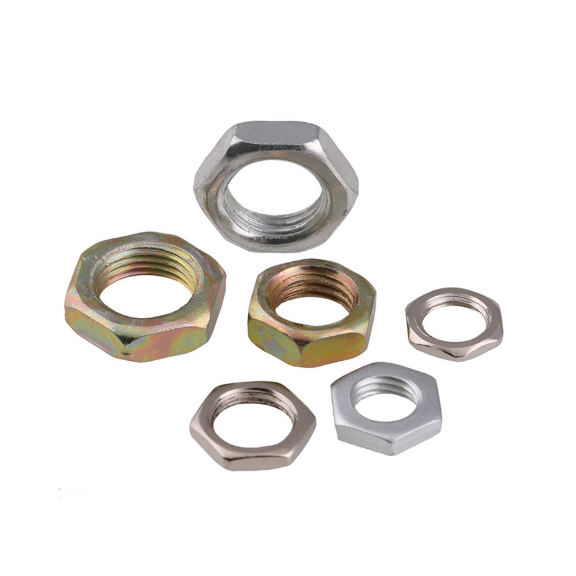
In addition to using cotter pins and split pins, there are other types of locking mechanisms that can be used with slotted hex nuts. For example, Hex Thin Nut can be used in combination with a slotted hex nut to provide additional locking force. These thin nuts are designed to be tightened against the slotted hex nut, creating a friction fit that helps to prevent loosening.
DIN985 Nylon Lock Nut is another option for securing slotted hex nuts. These nuts have a nylon insert that creates a locking action when tightened. The nylon insert deforms slightly, creating a tight fit between the nut and the bolt, which helps to prevent the nut from loosening.
DIN934 Hex Nuts can also be used in conjunction with slotted hex nuts. These standard hex nuts are known for their high strength and durability. When used together with a slotted hex nut, they can provide a reliable and secure connection.

The choice of securing method depends on several factors, such as the application, the level of vibration or movement, and the required level of security. For example, in high-vibration applications, using a cotter pin or a nylon lock nut may be the best option. On the other hand, in applications where weight is a concern, a split pin or a thin nut may be more suitable.
It's also important to consider the quality of the nuts and the securing components. As a hex nut supplier, I always make sure to provide high-quality products that meet the relevant standards. Using low-quality nuts or securing components can lead to premature failure and potential safety hazards.
When installing slotted hex nuts and their securing components, it's crucial to follow the proper procedures. Make sure the nut is tightened to the correct torque specification, and the cotter pin or split pin is inserted correctly and bent back securely. This will ensure that the nut remains secure and the connection is reliable.
If you're in the market for slotted hex nuts or other types of nuts, I'm here to help. As a trusted hex nut supplier, I offer a wide range of products at competitive prices. Whether you need a small quantity for a DIY project or a large order for an industrial application, I can provide you with the right nuts and securing solutions.
If you have any questions or would like to discuss your specific requirements, feel free to reach out. I'm always happy to assist you in finding the best products for your needs. Let's work together to ensure your projects are successful and your connections are secure.
References
- Machinery's Handbook, Industrial Press Inc.
- Fastener Handbook, Bossard Group