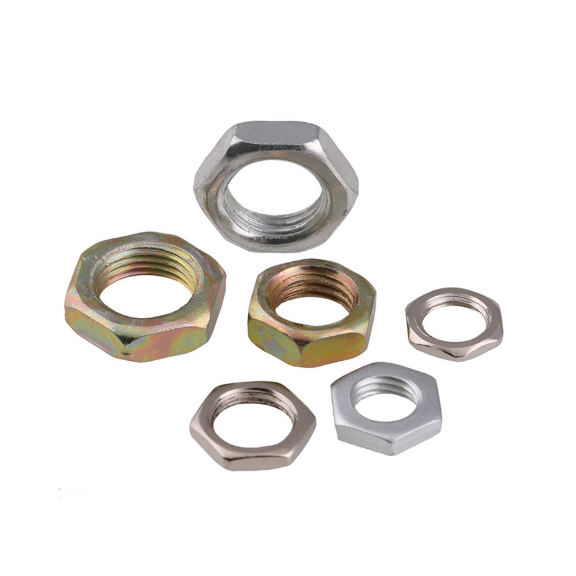
Preventing a hex thin nut from loosening is a crucial concern in various industries, especially when it comes to ensuring the stability and safety of mechanical assemblies. As a supplier of high - quality hex thin nuts, I've encountered numerous situations where customers are looking for effective solutions to this problem. In this blog, I'll share some practical methods to prevent hex thin nuts from loosening.
Understanding the Causes of Nut Loosening
Before diving into the prevention methods, it's essential to understand why hex thin nuts loosen in the first place. There are several factors that can contribute to this issue.
Vibration: One of the most common causes is vibration. In machinery and equipment, continuous vibration can gradually cause the nut to rotate and loosen. For example, in automotive engines or industrial machinery, the constant movement and vibration can disrupt the tight fit between the nut and the bolt.
Thermal Expansion and Contraction: Temperature changes can also lead to nut loosening. When materials expand or contract due to temperature variations, the tension between the nut and the bolt can be affected. This is particularly relevant in applications where the equipment is exposed to extreme temperatures, such as in aerospace or outdoor industrial settings.
Incorrect Installation: If the nut is not installed correctly, it may not be tightened to the appropriate torque. An under - tightened nut is more likely to loosen over time, while an over - tightened nut can cause damage to the threads or the material, also leading to potential loosening.
Effective Prevention Methods
1. Use of Locking Nuts
Locking nuts are designed to resist loosening. There are different types of locking nuts available in the market. For instance, the DIN6923 Serrated Flange Nut has a serrated flange that bites into the surface, providing additional friction and preventing the nut from rotating. These nuts are commonly used in applications where vibration is a significant concern, such as in automotive and machinery industries.
Another type is the prevailing - torque locking nut. This type of nut has a built - in feature that creates a high - friction interface between the nut and the bolt. As the nut is tightened, the prevailing torque resists rotation, keeping the nut in place even under vibration.
2. Thread Locking Compounds
Thread locking compounds are chemical adhesives that can be applied to the threads of the nut and bolt. These compounds fill the gaps between the threads, creating a strong bond that prevents the nut from loosening. There are different types of thread locking compounds available, such as anaerobic and acrylic compounds.
Anaerobic compounds cure in the absence of air and are ideal for applications where the joint is not easily accessible for disassembly. Acrylic compounds, on the other hand, can be easily removed and are suitable for applications where frequent disassembly is required.
3. Proper Installation and Torque Control
Proper installation is key to preventing nut loosening. It's important to use the correct tools and follow the manufacturer's guidelines for torque values. A torque wrench should be used to ensure that the nut is tightened to the appropriate level.
Over - tightening can damage the threads and the material, while under - tightening can lead to loosening. For example, in a high - stress application, a loose nut can cause significant damage to the equipment. Therefore, it's crucial to have a clear understanding of the required torque values for different applications.
4. Lock Washers
Lock washers are another effective way to prevent nut loosening. There are different types of lock washers, such as split lock washers and toothed lock washers. Split lock washers work by creating a spring - like tension between the nut and the surface, while toothed lock washers have teeth that dig into the surface, providing additional grip.

However, it's important to note that the effectiveness of lock washers can vary depending on the application. In some cases, they may not be sufficient to prevent loosening, especially in high - vibration or high - stress applications.
Case Studies
Let's take a look at some real - world examples of how these prevention methods have been applied.
In an automotive manufacturing plant, the use of DIN 439 Hex Thin Nut Manufacturer Low Profile Jam Nut Supplier DCS Screws in combination with thread locking compounds has significantly reduced the number of loose nuts in engine assemblies. By applying the thread locking compound to the threads of the nuts and bolts, the plant was able to ensure a more secure connection, even under the high - vibration environment of the engine.
In a power transmission line project, Ball Lock Security Nut For Transmission Line HDG Applications were used to prevent nut loosening. These nuts have a unique locking mechanism that provides a high level of security, making them ideal for applications where safety is of utmost importance.
Conclusion
Preventing hex thin nuts from loosening is a multi - faceted problem that requires a combination of proper installation, the use of appropriate locking mechanisms, and understanding the specific requirements of the application. As a supplier of hex thin nuts, I'm committed to providing high - quality products and solutions to our customers.
If you're facing issues with nut loosening in your applications, or if you're looking for reliable hex thin nuts and related products, I encourage you to contact us for a procurement discussion. We have a team of experts who can help you select the right products and provide technical support to ensure the success of your projects.
References
- Machinery's Handbook, 31st Edition
- Automotive Engineering Manual
- Industrial Fasteners Institute Guidelines