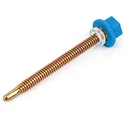
Advanced Corrosion-Resistant Coatings Enhance the Reliability of Self Drilling Screws
In modern construction and steel structure projects, the durability of fastening systems plays a crucial role in structural safety and long-term performance. One of the key factors affecting the lifespan of fasteners such as self drilling screws is their ability to resist corrosion in harsh environments.

Recent developments in coating technology have significantly improved the corrosion resistance of fasteners used in roofing systems, metal structures, and industrial buildings. Zinc-tin composite coatings are increasingly adopted due to their ability to provide strong protection while maintaining mechanical performance.
Understanding Corrosion Resistance Classes
Coating performance is often evaluated using corrosion resistance classes. These classifications help manufacturers, contractors, and distributors select the appropriate fasteners for different environmental conditions.
The corrosion resistance classes typically vary according to coating composition, thickness, and surface porosity characteristics.
Corrosion Resistance Class Coating Composition Minimum Coating Thickness (Microns) Minimum Porosity Rating
2 20–30% Tin Balance Zinc 12 6
3 20–30% Tin Balance Zinc 25 8
4 25–30% Tin Balance Zinc 45 8
As the corrosion resistance class increases, the coating layer becomes thicker and more protective. Higher classes are usually recommended for environments exposed to moisture, salt, or industrial pollutants.
Why Coating Thickness Matters
Coating thickness directly influences the service life of fasteners. A thicker protective layer helps prevent oxidation and reduces the likelihood of surface degradation over time.
For example:
Class 2 coatings are suitable for general indoor or low-exposure applications.
Class 3 coatings provide improved protection for roofing and structural installations.
Class 4 coatings offer enhanced durability for outdoor or demanding environments.

These improvements are particularly valuable in construction projects where metal roofing sheets and steel panels are installed using hex head self drilling screws.
Applications in Construction and Steel Structures
Corrosion-resistant fasteners are widely used in:
Steel structure assembly
Metal roofing installation
Industrial building construction
Solar mounting systems
Outdoor infrastructure projects
By selecting screws with appropriate coating specifications, contractors can significantly reduce maintenance costs and extend the operational life of their projects.
Growing Demand for High-Performance Fasteners
As construction standards continue to evolve, the demand for corrosion-resistant fastening solutions is increasing worldwide. Importers, distributors, and project contractors are paying closer attention to coating quality, material performance, and international manufacturing standards.
Manufacturers specializing in self drilling screws are investing in improved coating technologies to ensure consistent product quality and reliable corrosion protection.
For buyers sourcing fasteners for steel structures, roofing systems, and large construction projects, understanding coating classifications can help ensure the right product is selected for long-term performance.