Why More Overseas Buyers Are Requesting Customized Screw Packaging And Head Marking In 2026
In recent years, customized packaging and private label requirements have become increasingly common in the global fastener industry.
In 2026, this trend is becoming even more obvious.
More importers, distributors, and construction material suppliers are no longer purchasing screws as purely standard industrial products. Instead, many buyers now expect customized branding, color boxes, logo head marking, and market-specific packaging solutions as part of long-term business cooperation.
For fastener manufacturers, this shift is changing not only production planning, but also packaging management, quality control, and export operations.

Customized Packaging Is No Longer Limited To Large Brands
Several years ago, customized screw packaging was mainly requested by large international brands or supermarket chains.
Today, even medium-sized distributors and regional importers are requesting:
Customized color boxes
Private labels
Barcode stickers
Local language packaging
Pallet marking
OEM carton printing
This is especially common in markets such as:
South America
Middle East
Eastern Europe
Southeast Asia
Africa
Many local distributors now want to establish stronger market identity and reduce direct price competition.
Instead of selling generic screws, they prefer to build their own local brand image.

Why Head Marking Is Becoming More Important
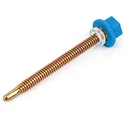
Another noticeable trend is customized head marking on screws.
In roofing screws and structural fasteners, buyers increasingly request:
Company initials
Brand letters
Customized symbols
Specific head patterns
Head marking is not only for branding.
In many projects, it also helps:
Product traceability
Anti-counterfeit identification
Project quality management
Supplier recognition
For distributors, customized head marking helps distinguish their products from generic market supplies.

Roofing Screw Buyers Are Paying More Attention To Packaging Quality
In roofing screw exports, packaging quality has become increasingly important.
Many importers now require:
Moisture-resistant packaging
Strong export cartons
Palletized loading
Clear barcode labels
Batch tracking systems
In some coastal and humid regions, poor packaging may lead to carton deformation, moisture problems, or label damage during transportation.
As a result, packaging is no longer treated as a secondary issue.
It has become part of overall product quality evaluation.

Different Markets Have Different Packaging Preferences
From our recent export experience, packaging requirements vary significantly depending on the market.
For example:
| Market | Common Packaging Preference |
|---|---|
| South America | Color boxes with Portuguese or Spanish labels |
| Middle East | Arabic labels and stronger pallet protection |
| Eastern Europe | Head marking and technical batch control |
| Southeast Asia | Moisture-resistant packaging |
| Africa | Flexible mixed-size carton loading |
Understanding these regional preferences helps manufacturers reduce communication problems and improve delivery efficiency.
OEM Fastener Business Requires More Than Just Production
Many buyers assume OEM fastener supply simply means printing a logo on the carton.
In reality, OEM cooperation often involves:
Packaging design coordination
Label compliance
Barcode management
Production scheduling
Batch traceability
Pallet standards
Shipping mark control
For manufacturers, this requires stronger production organization and export experience.
In many projects, packaging mistakes can create as many problems as product quality issues.

Customized Packaging Also Changes Inventory Management
Private label packaging affects inventory planning significantly.
Unlike standard bulk products, customized packaging usually requires:
Separate carton inventory
Dedicated labels
Brand-specific pallet marks
Production batch separation
This increases warehouse management complexity and production coordination requirements.
As more buyers move toward OEM branding, manufacturers must improve operational flexibility.
More Buyers Are Combining Product Quality With Brand Identity
In the past, many buyers mainly focused on price.
Today, especially in competitive construction markets, distributors increasingly care about:
Brand image
Product consistency
Packaging appearance
Customer recognition
Long-term market positioning
As a result, customized screw packaging is no longer only about appearance.
It is becoming part of the distributor's business strategy.

Common Customized Packaging Options For Screw Export
| Packaging Type | Typical Application |
|---|---|
| Neutral bulk cartons | Wholesale projects |
| Small color boxes | Retail distribution |
| OEM printed cartons | Brand distributors |
| Barcode label systems | Supermarkets & chain stores |
| Palletized export packing | Container shipping |
| Mixed-size cartons | Construction supply distributors |
Why Communication Becomes More Important In OEM Orders
Compared with standard products, OEM fastener orders require much more communication before production.
Buyers often need to confirm:
Artwork files
Logo details
Label language
Carton dimensions
Packing quantity
Shipping marks
Pallet size
Inspection requirements
Accurate communication helps reduce production errors and delivery delays.
The fastener industry is gradually shifting from simple product supply toward integrated branding and packaging solutions.
In 2026, customized packaging, OEM branding, and head marking are becoming increasingly important for distributors and importers seeking stronger market competitiveness.
For manufacturers, this trend requires not only stable production quality, but also stronger packaging coordination, export experience, and long-term cooperation capability.