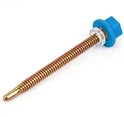
A washer is a common mechanical component, typically made of materials such as metal, plastic, or rubber. Its core function is to provide cushioning, sealing, or load distribution between bolts, nuts, or other fasteners and the connected surfaces. Despite its simple structure, washers play a vital role in industry, construction, automobiles, and everyday equipment. This article will analyze the main functions, common types, and typical applications of washers.
Core Functions of Washers
The main functions of washers can be summarized as follows:
1. Pressure Distribution: When a fastener (such as a bolt) is tightened, localized pressure on the contact surface may be excessive, causing deformation or damage to the material. Washers increase the contact area and evenly distribute the pressure, thereby protecting the connected surfaces.
2. Anti-loosening and Locking: Some washers (such as spring washers and toothed washers) increase frictional resistance through elastic deformation or tooth engagement, preventing fastener loosening caused by vibration.
3.Sealing and Insulation: Gaskets made of rubber or soft materials (such as O-rings) fill gaps and prevent the leakage of liquids or gases, while non-conductive gaskets are used for insulation protection in electrical equipment.
Common Types of Gaskets
Based on their material and application, gaskets can be divided into the following categories:
Flat washers: The most basic type, typically made of metal (such as steel or stainless steel) or non-metallic materials (such as nylon), are primarily used to distribute pressure and protect surfaces.
Spring washers: These have an elastic structure (such as a corrugated or spiral shape) that enhances the anti-loosening properties of fasteners through rebound force.
Sealing washers: Made of flexible materials such as rubber, silicone, or polytetrafluoroethylene (PTFE), they are suitable for sealing applications such as pipe connections and hydraulic systems.
Specialty washers: Examples include insulating washers (used in electronic equipment), toothed washers (for enhanced frictional anti-loosening), and self-locking washers (which achieve permanent locking through internal structure).
Gasket Applications
Gaskets are widely used in a variety of fields:
Mechanical Manufacturing: In machine tools, engines, and other equipment, gaskets ensure the stability and durability of bolted connections.
Construction Engineering: Steel structure connections and pipe flange fixings rely on gaskets for load balancing and sealing.
Automotive Industry: Critical components such as engine cylinder heads and chassis suspension systems use high-strength gaskets to withstand extreme operating conditions.
Household Appliances: In the assembly of appliances like washing machines and refrigerators, gaskets provide shock absorption and prevent moisture and electrical leakage.
Conclusion
Although gaskets are often viewed as insignificant auxiliary components, their design directly impacts the reliability and safety of mechanical systems. With advances in materials science, modern gaskets are achieving breakthroughs in lightweighting, corrosion resistance, and functionality. They will play a more important role in high-end fields such as aerospace and new energy. The correct selection and use of gaskets is a crucial detail in ensuring project quality.