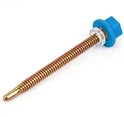
How to Select the Correct Self-Drilling Screw Point for Different Steel Thicknesses: A Technical Guide for Contractors and Importers
In industrial construction, metal roofing, steel framing, and solar mounting projects, the performance of a self-drilling screw depends heavily on one critical factor that many buyers overlook:
the drill point selection.
Many fastening failures in overseas projects do not happen because of screw quality alone.
They happen because the wrong drilling point is used for the steel thickness.
This leads to:
drill tip burning
broken screw points
loose fastening
water leakage
poor pull-out strength
installation delays
For contractors, distributors, and importers, understanding screw point capacity is essential for both project safety and procurement efficiency.
This guide explains how to correctly choose the right self-drilling screw point based on steel thickness and application.

Why Screw Point Selection Matters
A self-drilling screw performs three functions in one operation:
drilling
thread forming
fastening
The drill point must be matched to the substrate thickness.
In our experience, if you try to drill 5mm steel with an SD1 point, the tip will likely burn out within the first 5 seconds, leaving the screw stuck
tip overheats
hardness reduces
screw breaks
If the point is too aggressive for thin sheets:
oversized holes
poor thread engagement
reduced clamping force
This is one of the most common mistakes in metal roofing and PEB projects.

Recommended Drill Point by Steel Thickness
SD1 / #1 Point - Light Gauge Steel
Suitable for:
roofing sheets
cladding panels
light sheet metal
Steel thickness:
up to 2.0 mm
Typical applications:
steel roofing sheet to thin purlin
sandwich panel fixing
HVAC duct connection
This is the most common point for roofing distributors.
SD2 / #2 Point - Medium Steel
Suitable for:
C purlin
Z purlin
steel studs
Steel thickness:
2.0 mm – 4.5 mm
Typical applications:
warehouse roofing
steel structure wall cladding
light industrial buildings
This is one of the most demanded export specifications in Southeast Asia, Middle East, and South America.
SD3 / #3 Point - Heavy Steel
Steel thickness:
4.5 mm – 8.0 mm
Best for:
thick purlins
brackets
support frames
solar mounting steel rails
This point is widely used in industrial workshops and solar EPC projects.
SD4 / #4 Point - Structural Steel
Steel thickness:
8 mm – 12 mm
Applications:
heavy steel beam connections
structural brackets
large-span steel buildings
For export buyers, this category usually requires higher drill hardness consistency and strict heat treatment control.
How Buyers Commonly Make the Wrong Choice
Many customers assume:
longer screw = stronger screw
This is technically incorrect.
The real deciding factor is:
drill point design
hardness
drill flute geometry
thread pitch
EPDM sealing performance
Length alone cannot solve drilling issues.
For example:
A 65 mm screw with SD1 point will still fail on 5 mm steel.
This is exactly where many project delays happen.
Professional Recommendation for Importers
When purchasing self-drilling screws for distribution or project supply, always confirm:
1. Steel thickness range
Ask end users:
What is the exact substrate thickness?
This single question improves quotation accuracy significantly.
2. Coating requirement
For roofing projects:
Ruspert
Class 4 coating
hot dip galvanized
zinc plated
must be selected based on corrosion environment.
3. Washer quality
For roofing and waterproof applications:
EPDM washer quality is as important as screw hardness
Poor washers cause leakage complaints.
Why This Matters for Long-Term Project Safety
A screw is a small component, but it directly affects:
wind uplift resistance
waterproofing
long-term corrosion resistance
maintenance cost
In modern steel construction, correct point selection improves installation efficiency by up to 30–40%.
For contractors and distributors, choosing the correct screw specification reduces after-sales risk and increases customer trust.
Need Technical Support for Your Project?
At DCScrews, we help customers select the right self-drilling screw based on:
steel thickness
application environment
coating standard
load requirement
Whether for roofing, PEB, solar mounting, or structural steel, our technical team can provide customized fastening solutions.