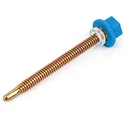
Complete Guide to Hex Bolt Thread Dimensions
Understanding thread dimensions is essential when selecting hex bolts for structural and industrial applications. Three key measurements define thread geometry: major diameter, minor diameter, and pitch diameter.
What Is Major Diameter?
The major diameter is the largest diameter of the external thread.
👉 It determines:
Bolt size classification
Load-bearing surface
What Is Minor Diameter?
The minor diameter is the smallest diameter of the thread root.
👉 It affects:
Core strength
Resistance to shear
What Is Pitch Diameter?
The pitch diameter is the most critical measurement for thread engagement.
👉 It controls:
Fit between bolt and nut
Tightness and friction
📊 Hex Bolt Thread Size Chart
dmajor>dpitch>dminord_{major} > d_{pitch} > d_{minor}dmajor>dpitch>dminor
| Size | Major Dia (mm) | Pitch (mm) | Minor Dia (mm) |
|---|---|---|---|
| M6 | 6.00 | 1.0 | 4.77 |
| M8 | 8.00 | 1.25 | 6.47 |
| M10 | 10.00 | 1.5 | 8.16 |
| M12 | 12.00 | 1.75 | 9.85 |
| M16 | 16.00 | 2.0 | 13.55 |
How Go / No-Go Gauges Work
Thread inspection is essential in manufacturing.
Go Gauge
Should pass smoothly
Confirms correct thread size
No-Go Gauge
Should NOT pass
Prevents oversized threads
Why Thread Accuracy Impacts Performance
Incorrect thread dimensions can lead to:
Loose connections
Reduced load capacity
Thread stripping
Practical Selection Tips
Use coarse thread for construction
Use fine thread for precision equipment
Match nut tolerance with bolt

Applications of Hex Bolts
Steel structures
Machinery assembly
Automotive industry
Construction projects
Why Choose a Reliable Manufacturer
Strict thread tolerance control
Advanced inspection equipment
Stable bulk production
Request Quote & Samples
Looking for high-quality hex bolts?
Send your inquiry with:
Size
Grade
Quantity
👉 Free samples
👉 Fast response within 12 hours