


Who invented the hex nut? This is a question that often sparks curiosity among those in the fastener industry. As a supplier of hex nuts, I've delved deep into the history of these essential components to understand their origin and evolution. In this blog, I'll share what I've learned about the invention of the hex nut and its significance in modern manufacturing.
The Origins of Nuts and Bolts
To understand the invention of the hex nut, we first need to look at the broader history of nuts and bolts. The concept of using threaded fasteners dates back thousands of years. The ancient Greeks are credited with inventing the screw thread around the 3rd century BC. However, these early screws were primarily used for mechanical devices such as presses and water screws, rather than for joining materials.
The first true nuts and bolts emerged in the 15th century. These early fasteners were hand - forged and had square heads. Square nuts and bolts were simple to manufacture, as they could be easily formed using basic blacksmithing techniques. They were widely used in various industries, including shipbuilding, construction, and machinery manufacturing.
The Emergence of the Hex Nut
The hex nut, with its six - sided shape, started to gain popularity in the 19th century. The exact inventor of the hex nut is difficult to pinpoint, as its development was likely a result of the cumulative efforts of many engineers and manufacturers over time.
One of the main advantages of the hex nut over the square nut is its increased torque capacity. The six - sided design provides more contact points for a wrench, allowing for greater leverage when tightening or loosening the nut. This makes hex nuts more efficient and reliable, especially in applications where high - strength connections are required.
Another factor that contributed to the widespread adoption of hex nuts was the advancement of manufacturing technology. The Industrial Revolution brought about significant improvements in machining processes, making it easier and more cost - effective to produce hexagonal shapes. Precision machining techniques allowed for the mass production of hex nuts with consistent dimensions and high quality.
The Role of Standardization
Standardization played a crucial role in the success of the hex nut. In the late 19th and early 20th centuries, various national and international standards organizations were established to ensure the compatibility and interchangeability of fasteners. For example, the Deutsches Institut für Normung (DIN) in Germany developed a comprehensive set of standards for nuts and bolts, including the specifications for hex nuts.
These standards defined the dimensions, materials, and performance requirements of hex nuts, making it easier for manufacturers to produce and for users to select the right fasteners for their applications. Today, there are numerous types of hex nuts available, each designed to meet specific needs. For instance, the DIN6923 Flange Nut is a type of hex nut with an integrated flange that provides a larger bearing surface, distributing the load more evenly and reducing the risk of damage to the connected materials.
Different Types of Hex Nuts
Hex nuts come in a variety of forms to suit different applications. The Hex Thin Nut is a thinner version of the standard hex nut, which is often used in applications where space is limited. These thin nuts are commonly used in electronic devices, automotive components, and other precision assemblies.
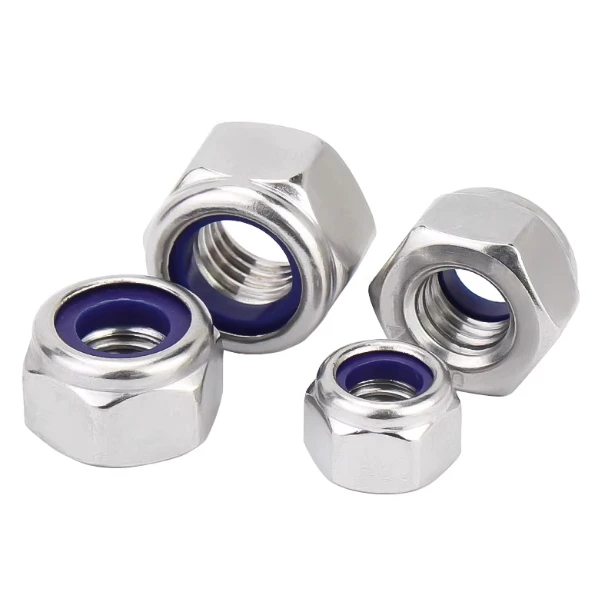
On the other hand, the DIN985 Nylon Lock Nut is designed to prevent loosening due to vibration. It has a nylon insert that creates friction against the bolt threads, providing a locking action. These nuts are widely used in machinery, automotive, and aerospace industries, where reliability and safety are of utmost importance.
The Modern - Day Significance of Hex Nuts
In modern manufacturing, hex nuts are ubiquitous. They are used in everything from small household appliances to large - scale industrial machinery, automotive vehicles, and aerospace structures. The versatility and reliability of hex nuts make them an essential component in countless products and systems.
As a hex nut supplier, I've witnessed firsthand the importance of these small but mighty fasteners. Our customers rely on us to provide high - quality hex nuts that meet their specific requirements. Whether it's a standard hex nut for a general - purpose application or a specialized nut for a critical aerospace component, we strive to offer the best products and services.
Contact for Procurement
If you're in need of hex nuts for your project, I encourage you to reach out to us. We have a wide range of hex nuts in stock, including various sizes, materials, and types. Our team of experts can help you select the right fasteners for your application and ensure that you get the best value for your money. Whether you're a small - scale manufacturer or a large - scale industrial enterprise, we're committed to providing you with the highest level of service and support.

References
- "A History of the Screw Thread" by Henry Petroski
- "Fasteners and Their Applications" by John H. Bickford
- DIN Standards for Nuts and Bolts, Deutsches Institut für Normung


